
Key facts
Local officials now have confirmation of their presence closer to home: A new study from Environment America found microplastics throughout the sprawling Chesapeake Bay watershed.1
Elly Wilson, director of the nonprofit’s state branch, Environment Virginia, said, “Every single one of those sites had microplastics in them.”1
The findings join a growing body of evidence that microplastics are everywhere, from Arctic glaciers to the deep-sea Mariana Trench.1
What the study found
Microplastic particles can be as large as 5 millimeters long, about the size of a pencil eraser, or microscopic, invisible to the naked eye.1
The Chesapeake Bay team conducted surveys between April 2024 and October 2026, taking six water samples at each site.1
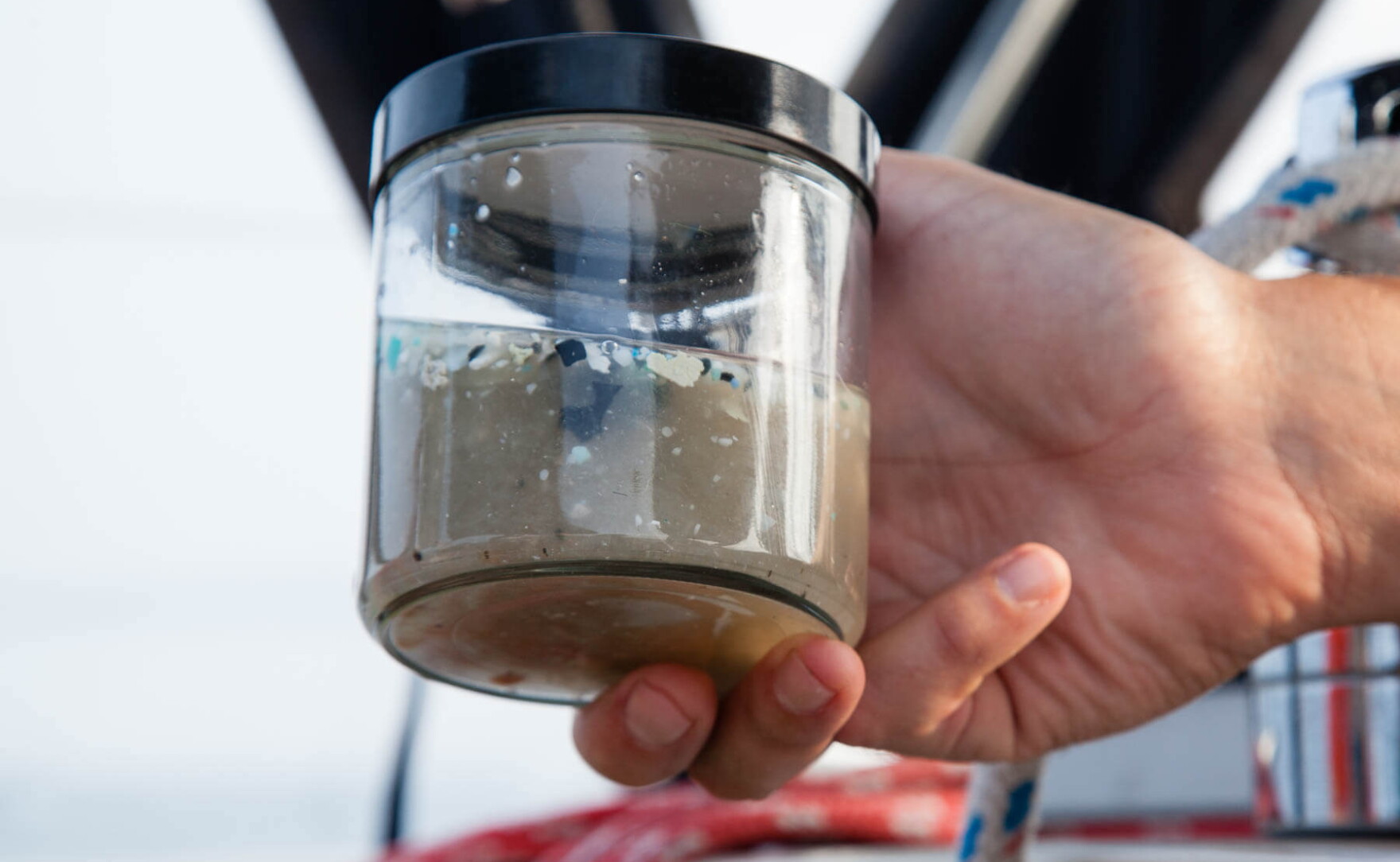
The water samples were stored in glass jars and transported to the PennEnvironment Research & Policy Center or the Academy of Natural Sciences at Drexel University, both in Philadelphia, where lab workers tested them for four types of microplastics.1
The most prevalent, found at all 15 sites, were microfibers, thin synthetic fibers such as from clothing and bedding.1
Microfragments were also found at all but one of the sites – bits that break off items such as plastic bottles, food packaging and tires.1
About half of the samples contained microfilms, flat fragments from more flexible plastics such as plastic wrap and bags, while microbeads, particles added to cosmetic and personal care products such as toothpaste and body scrubs, were the least common.1
Report authors noted that many of the sites had little to no visual litter at the point of access, but were nonetheless contaminated by plastic pollution.1
A global problem
Researchers estimate up to 40 million metric tons of microplastics are released each year globally.1
Environment America has had similar findings during surveys in Alaska, Texas and New York.1
Health risks and what to do
Research on the health impacts of microplastics is still in early stages, but evidence is mounting that exposure can harm humans and wildlife through effects such as inflammation and cell damage.1
Stanford Medicine said microplastics can also act as carriers for other toxins, attracting and binding to pollutants such as lead, mercury and PFAS “forever chemicals.”1
Experts say avoiding microplastics altogether is pretty much impossible.1
Individuals can try to limit their exposure by not using heat on plastics; wearing natural fibers such as cotton, wool or silk; washing clothing in cold water; using HEPA air filters to reduce inhalation of indoor dust particles; and using non-plastic containers such as glass or stainless steel.1
Wilson said her organization advocates for broader policy changes to stop pollution at the source.1
The report recommends requiring manufacturers to manage and finance plastic recycling programs and preventing companies from releasing pre-production plastic pellets called “nurdles” into the environment.1
Virginia has made some progress, such as banning food vendors from using Styrofoam containers.1